
GTM Overview
Click play button to hear narration
The GTM Paradigm Shift
Pull to Push Evolution
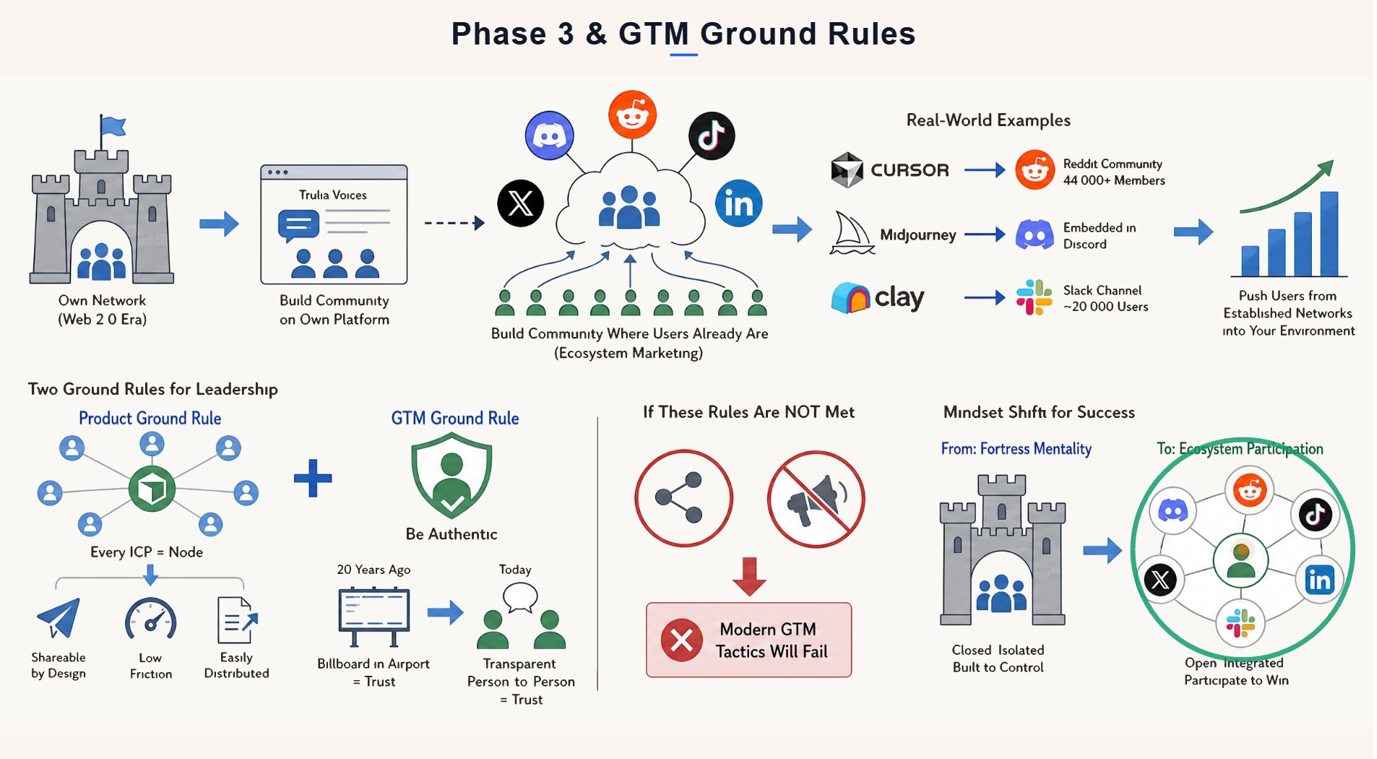
Phase 3 & GTM Ground Rules
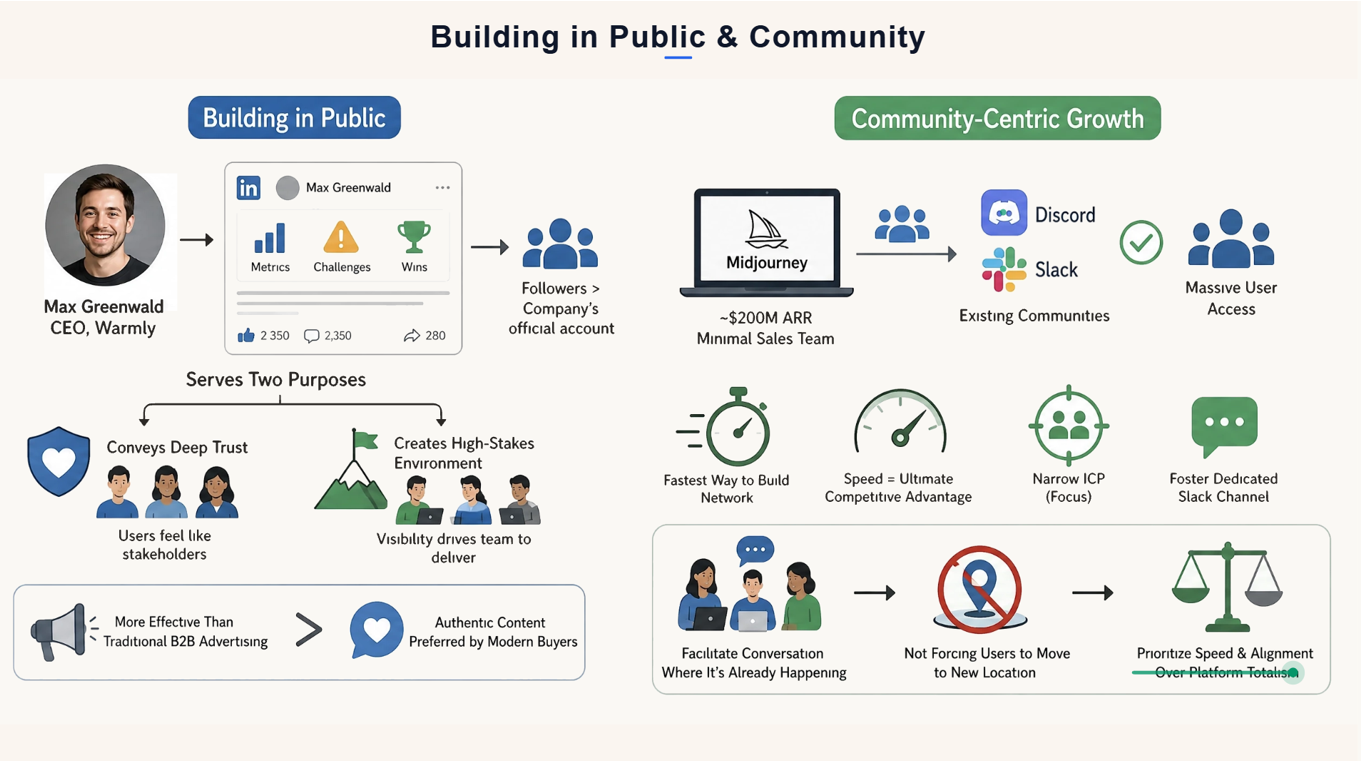
Building in Public & Community
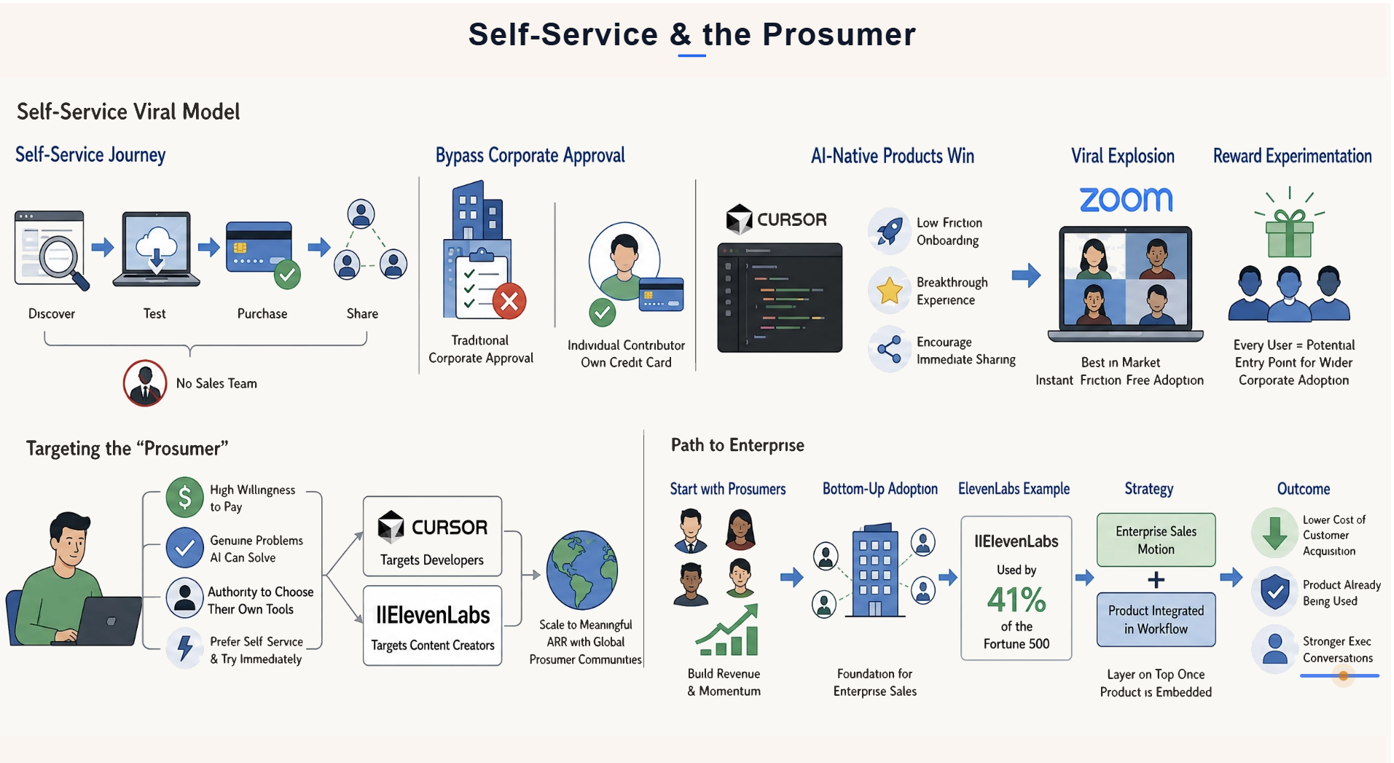
Self-Service & the Prosumer
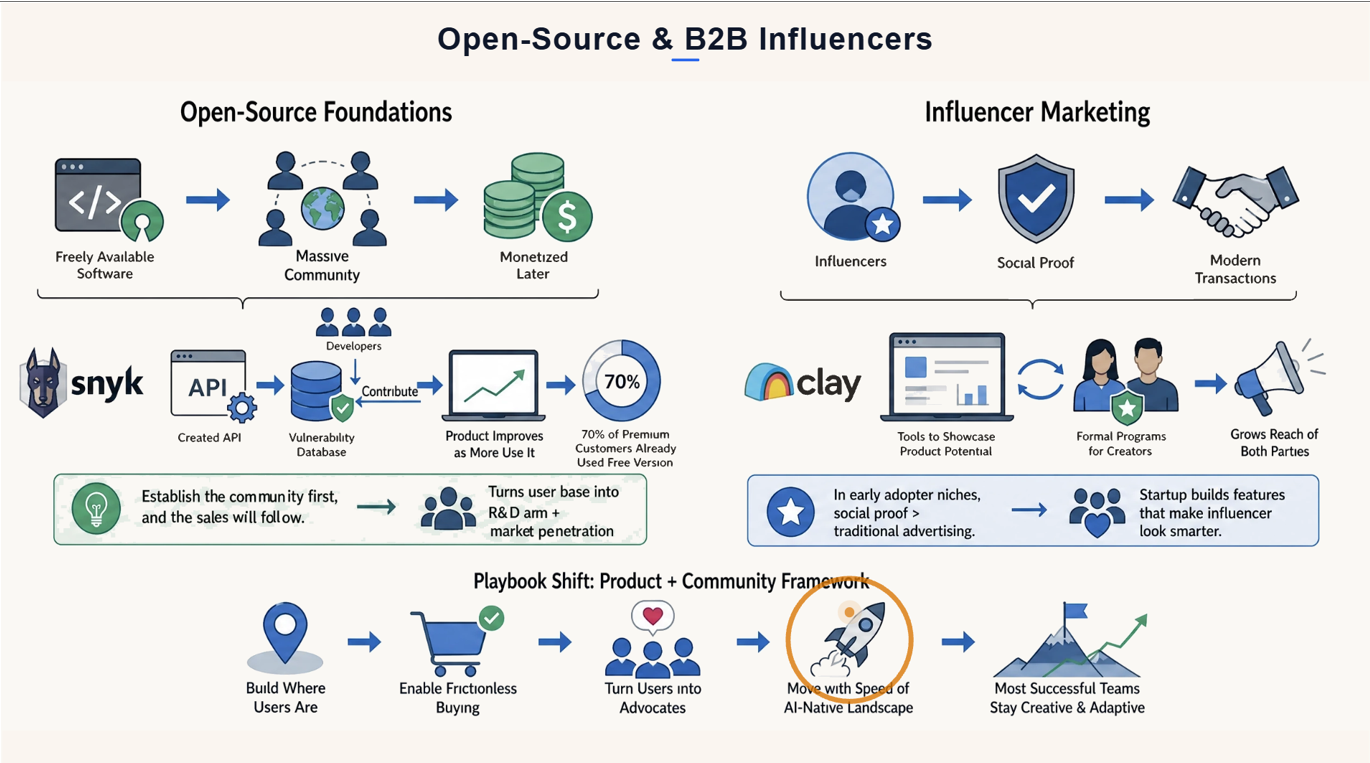
Open-Source & B2B Influencers
Full Transcript
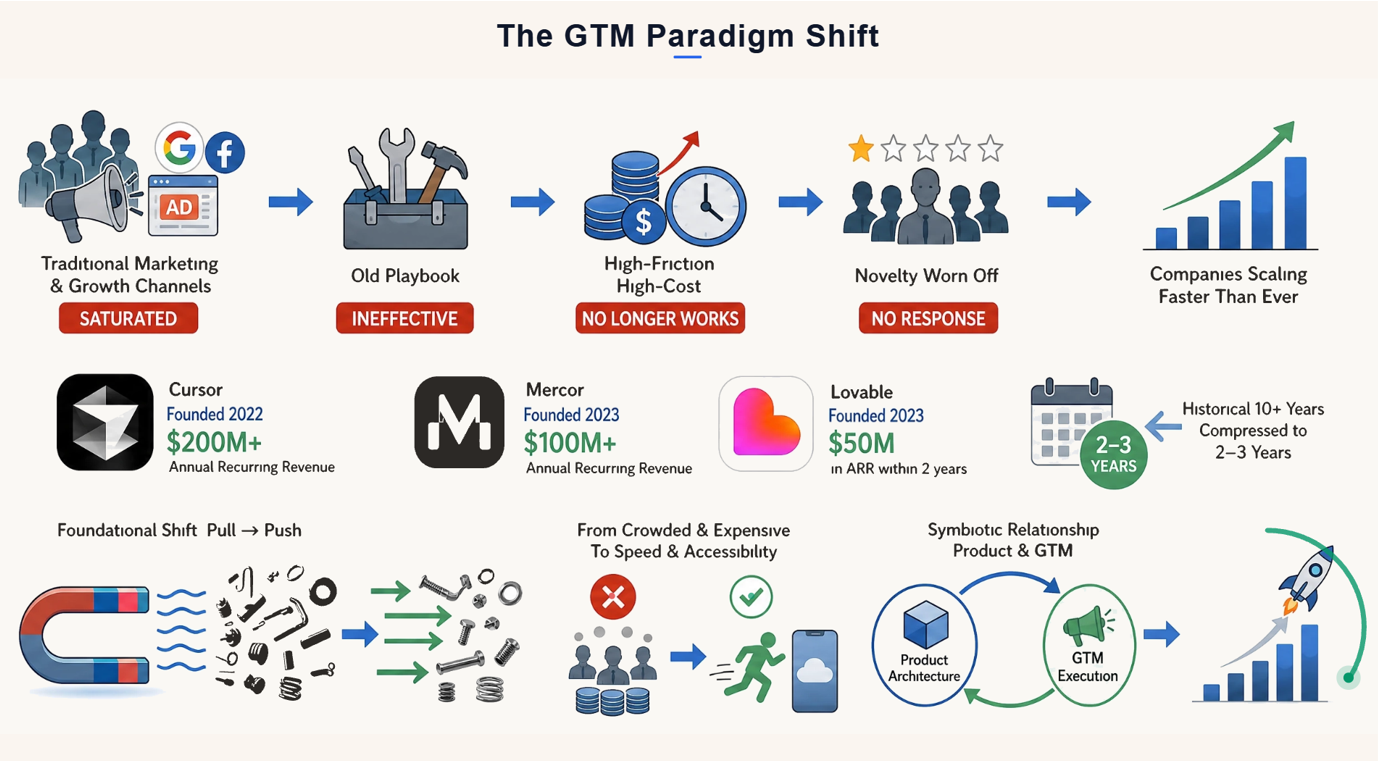
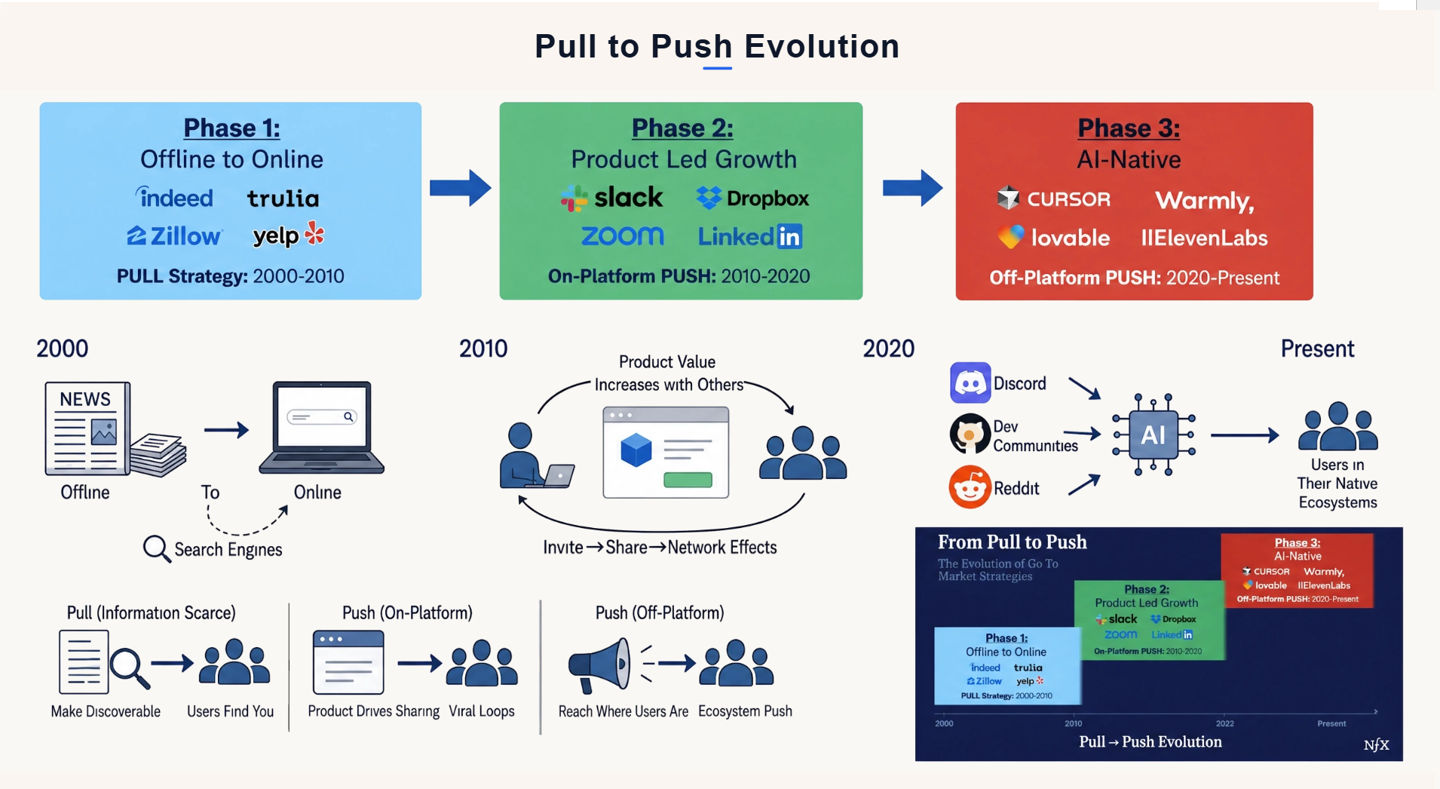
The GTM Paradigm Shift Traditional marketing and growth channels have reached a state of saturation that renders the old playbook increasingly ineffective. For startup leadership, the reality is that consumers and businesses no longer respond to the high-friction, high-cost strategies of the previous decade; the novelty of traditional digital marketing has worn off. However, the paradox of the current market is that while channels are crowded, companies are scaling faster than at any point in history. Consider the performance metrics of the current AI-native wave as of mid-2025: Cursor, founded only in 2022, has scaled to over 200 million dollars in annual recurring revenue. Mercor, established in 2023, has exceeded 100 million dollars in ARR, and Lovable is reportedly reaching 50 million dollars in ARR within two years of its inception. This level of growth, which historically required a decade to achieve, is being compressed into two or three years. While the accessibility of AI technology is a primary catalyst, the true differentiator lies in how these companies have re-shuffled the go-to-market strategy. They are moving away from isolated product development and instead leveraging a symbiotic relationship between product architecture and GTM execution. Pull to Push Evolution The evolution of go-to-market strategies can be categorized into three distinct generational phases, moving from a "Pull" philosophy to an increasingly sophisticated "Push" mechanism. Phase 1, spanning from 2000 to 2010, was defined by the transition from "Offline to Online." This was the era of the Pull strategy, where companies like Zillow, Trulia, Yelp, and Indeed thrived by digitizing information that was previously hidden in newspapers or office paperwork. In this phase, search engines were the primary engine of growth. Startups acted as a center of gravity, using SEO and PR to pull users into their gravitational field. Because information was scarce and hard to find, simply making it discoverable was enough to scale. However, as search matured and information became ubiquitous, the "Pull" strategy became saturated and less effective for new entrants. Phase 2, occurring between 2010 and 2020, introduced Product-Led Growth, or what we call "On-Platform Push." Companies like Slack, Dropbox, Zoom, and LinkedIn built growth mechanisms directly into the software. The product itself pushed users to share and evangelize; for instance, the value of Zoom or Slack increased only when you invited others to join the network. This era proved that the product could drive its own adoption through viral loops and network effects. While this model remains a dominant foundation, users have become increasingly resistant to aggressive virality tactics, and privacy concerns have made large-scale on-platform sharing harder to scale. We are now in Phase 3, the AI-Native era, which identifies as "Off-Platform Push," starting around 2020. This phase shifts the focus from owning the network to building within the ecosystems where users already spend their time, such as Discord or specialized developer communities. Phase 3 & GTM Ground Rules The hallmark of Phase 3, or "Off-Platform Push," is the realization that a company does not need to own its network outright to achieve massive scale. In the previous era, companies attempted to build their own community platforms, such as "Trulia Voices," to capture and control conversations. Today, the most effective path is to build a community where the users currently reside and where engagement is already high. This "ecosystem marketing" involves leveraging third-party networks like Discord, Reddit, TikTok, X, and LinkedIn to drive growth. For example, while Cursor maintains its own forum, it leverages a Reddit community of over 44,000 members. Midjourney remains embedded within Discord, and Clay saw explosive growth by launching a Slack channel that now supports nearly 20,000 engaged users. To execute this effectively, leadership must adhere to two fundamental ground rules. The first is a Product Ground Rule: the product must be a "multiplayer game." Every Ideal Customer Profile should be viewed as a node in a network. This means the product must be shareable by design, with low friction and outputs that are easily distributed. The second is a GTM Ground Rule: Be authentic. In a market where buyers are digitally native and skeptical of traditional advertising, authenticity is the primary currency. Success in the current era requires moving away from the "fortress" mentality of the web 2.0 era and instead becoming an active, integrated participant in the broader digital ecosystem. Building in Public & Community Two of the most potent strategies in the current playbook are "Building in Public" and "Community-Centric Growth." Building in Public is a GTM strategy centered on radical transparency. A prime example is Max Greenwald, CEO of Warmly. By sharing his company's journey, metrics, challenges, and wins in real-time on LinkedIn, he has amassed a following that exceeds his company's official account. This approach serves two purposes for leadership. First, it conveys deep trust to users, making them feel like stakeholders in the product's development. Second, it creates a high-stakes environment that motivates the team; when success and failure are visible to the public, there is a powerful drive to deliver. This is far more effective than traditional B2B advertising because it meets the modern buyer's preference for authentic content over polished corporate messaging. The second strategy, Community-Centric Growth, shifts the focus from building a platform to being where your users already gather. By integrating your product into existing communities, you eliminate the need for a massive, traditional sales infrastructure. Midjourney's success, reaching an estimated 200 million dollars in ARR with a minimal sales team, is a testament to this model. Self-Service & The Prosumer Modern GTM success also relies on the "Self-Service Viral" model and targeting the "Prosumer." The self-service model is designed to let users discover, test, and purchase products without any interaction from a sales team. The goal is to bypass the traditional corporate approval process; you want an individual contributor to be able to use their own credit card to experiment. AI-native products like Cursor excel here by offering low-friction onboarding and "breakthrough" experiences that encourage immediate sharing. When you reward experimentation, you turn every user into a potential entry point for wider corporate adoption later on. Targeting the "Prosumer" is a strategic sweet spot for AI startups. Prosumers are professionals with a high willingness to pay, genuine problems that AI can solve, and the authority to choose their own tools. They prefer self-service solutions they can try immediately. Cursor targets developers, while ElevenLabs targets content creators. These companies scale to meaningful ARR by capturing these global prosumer communities first. Eventually, this bottom-up adoption provides a foundation for enterprise sales. For instance, ElevenLabs started with prosumers but is now reportedly used by 41% of the Fortune 500. The strategy is to market to the individual contributor to build revenue and momentum, then layer an enterprise sales motion on top once the product has already integrated itself into the workflow. Open-Source & B2B Influencers The final two pillars of the upgraded playbook are Open-Source Foundations and Influencer Marketing. An open-source strategy builds a massive community around freely available software, which can be monetized later. As the frontier of software development expands, open-source communities provide a thriving network for product refinement and adoption. Snyk, a software security platform, leveraged this by creating an API and allowing developers to contribute to a vulnerability database. The product improved as more people used it, and eventually, 70% of companies that purchased premium services already had individual developers using the free version. The logic is simple: establish the community first, and the sales will follow. Finally, Influencer Marketing has moved beyond the consumer space into B2B. Influencers provide the social proof necessary for modern transactions. Clay provides a masterclass in this, building tools that help influencers showcase the product's potential and creating formal programs for creators. This is a two-way relationship where the startup builds features that make the influencer look smarter, which in turn grows the reach of both parties. When traditional channels are saturated, you must re-shuffle your strategy toward a "Product + Community" framework. Build where users are, enable frictionless buying, and turn users into advocates.